


LHC allows sugar mill to challenge tall crop ban at Multan bench
 Rabbia Zafar
|
1 week ago
Rabbia Zafar
|
1 week ago

The Lahore High Court (LHC) has allowed a sugar mill to file a petition before its Multan bench challenging restrictions imposed on the cultivation of tall crops in parts of southern Punjab, citing security concerns in the Katcha areas along the Indus River.
Chief Justice Aalia Neelum heard the petition filed by JDW Sugar Mills, which is owned by senior politician Jahangir Khan Tareen. The company challenged notifications issued by the deputy commissioners of Rahim Yar Khan and Rajanpur, which had banned the cultivation of tall crops in their respective districts.
The petitioner’s counsel, Advocate Shahzad Elahi, a former attorney general, argued that the matter should be heard at the principal seat of the Lahore High Court. However, he also pointed out that under the current arrangement, the petitioner would otherwise have to approach two separate benches—Multan and Bahawalpur—creating procedural difficulties.
The Punjab government was represented in the case by Assistant Advocate General Waqas Umar.
After hearing arguments, the chief justice allowed JDW Sugar Mills to proceed with its petition before the Multan bench, effectively consolidating the challenge against both district-level notifications.
The dispute stems from administrative restrictions placed by local authorities in Rahim Yar Khan and Rajanpur, where deputy commissioners had imposed a ban on growing tall crops. The measures were reportedly linked to security concerns in the Katcha belt, an area known for its difficult terrain and law-and-order challenges.
The court’s decision provides procedural clarity for the petitioner while leaving the substantive legality of the crop restrictions to be decided by the relevant bench. The case is expected to examine the balance between agricultural rights and security considerations in the region.






2 hours ago
2 hours ago
2 hours ago
2 hours ago
4 hours ago
5 hours ago
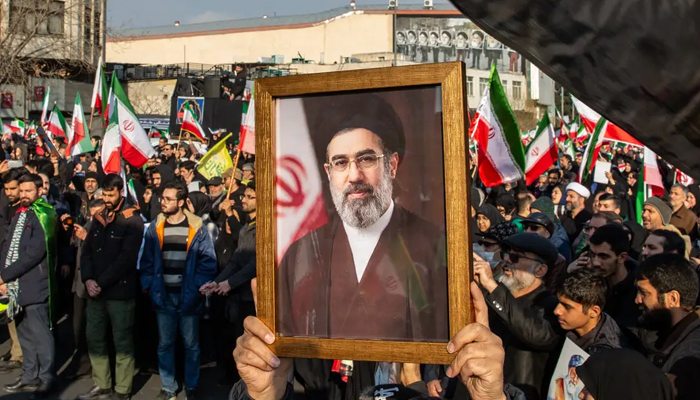
- US report reveals details on Iranian leader health condition, as the New York Times published claims about Iran’s new Supreme…
- Trump sees Israel Lebanon peace possible this year, as US President Donald Trump expressed optimism about improved relations. He said…
- Trump seeks lasting Iran deal, signals Strait of Hormuz reopening option, as US President Donald Trump said he will not…
- Trump claims Iran division, orders Strait of Hormuz blockade control, as US President Donald Trump announced strict military actions in…
 Federal health authorities have ordered strict nationwide enforcement of a ban on conventional disposable syringes and initiated a policy review…
 Pakistan’s second national anti-polio campaign of 2026 is continuing across the country, with efforts now in its sixth day as…
 A shocking report by BBC has triggered nationwide outrage in Pakistan after alleging severe medical malpractice at a Tehsil Headquarter…
 Pakistan’s second National Anti-Polio Campaign of 2026 is continuing across the country with full momentum, as health workers aim to…




- Pakistan decides immediate LNG purchase for three cargoes, as the…2 hours ago
- US report reveals details on Iranian leader health condition, as…2 hours ago
- Trump sees Israel Lebanon peace possible this year, as US…2 hours ago
- PSL 11 code breach fines imposed on Amir and Faheem…2 hours ago